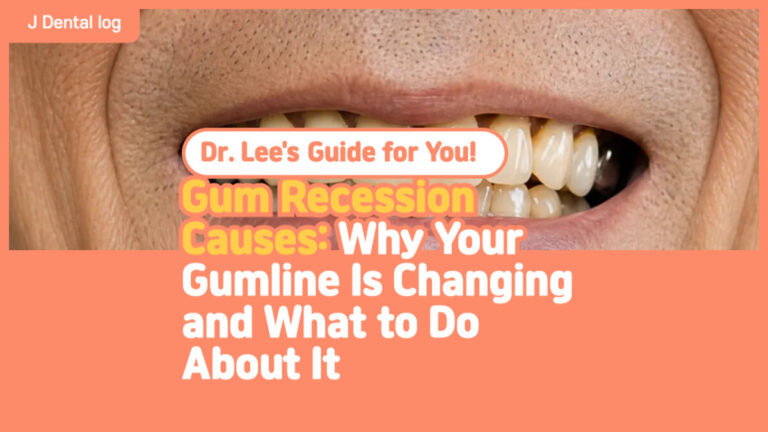
Hello I’m Dr. Lee! Here’s a question I get more often than you’d think: “My gums are receding do I have to have surgery?” The short answer is: not necessarily. Gum recession treatment is not a one-size-fits-all situation, and the decision to treat, monitor, or simply adjust certain habits depends on a much more individualized set of factors than most people realize.
Receding gums, tooth sensitivity, and concerns about root coverage and gum surgery are all part of the conversation — but so is the very real possibility that close monitoring and some straightforward changes might be all that’s needed.
Recession Doesn’t Automatically Mean Disease
This surprises a lot of patients, but it’s worth stating clearly: according to the periodontal literature, gum recession itself is not classified as a direct risk factor for periodontal disease. The two can co-exist, and gum disease can certainly cause recession, but recession alone doesn’t equal a disease diagnosis.
What this means practically is that gum recession treatment decisions aren’t driven purely by clinical severity. How much recession is present matters — but so does whether it’s progressing, whether the patient has aesthetic concerns, and whether the exposed root surface is creating functional problems.
When Treatment Is Worth Considering
There are situations where doing something is clearly the right call. These tend to involve one or more of the following:
The recession is actively progressing.
If monitoring over time shows the gumline continuing to move, that’s a signal that something driving it hasn’t been addressed. Leaving progressive recession unmanaged can make future gum recession treatment more complex and extensive.
The exposed root is hard to keep clean.
Root surfaces are structurally different from enamel they’re softer and more vulnerable to decay and plaque accumulation. When a significant portion of root is exposed and in a position that’s difficult to clean effectively, that changes the risk-benefit calculation.
The area keeps getting irritated.
Some areas of recession sit in spots that are repeatedly traumatized by lip movements, by the position of adjacent teeth, or by other mechanical factors. Ongoing irritation in an already compromised area warrants closer attention.
Aesthetics are a genuine concern.
This is a completely legitimate reason to explore gum recession treatment, and patients shouldn’t feel embarrassed to raise it. A gumline that looks uneven, or teeth that look excessively long, can affect how someone feels about their smile and that matters.
What About Tooth Sensitivity?
Exposed root surfaces are a common cause of tooth sensitivity particularly to cold temperatures, sweet foods, or even air exposure. Historically, root coverage procedures were frequently recommended with sensitivity management as a primary goal.
Today, the picture is more nuanced. There are a range of less invasive options available for managing tooth sensitivity and protecting exposed root surfaces including desensitizing agents, fluoride treatments, and bonding materials that don’t require gum surgery. This means the treatment ladder doesn’t jump straight to a surgical procedure just because a patient has sensitivity.
That said, if sensitivity is severe, persistent, and accompanied by significant recession that is progressing, root coverage through a surgical approach may still be the most effective long-term solution. The point is that the decision should be based on the full clinical picture, not on any single symptom.
The Most Important Step Comes Before Any Treatment Decision
Whatever direction gum recession treatment ends up taking, one thing has to happen first: identifying why the recession developed.
If aggressive brushing caused it and that habit hasn’t changed, no surgical procedure will produce a lasting result. If orthodontic tooth movement positioned a tooth in a more vulnerable location, that context needs to be part of the treatment planning conversation. If gum disease contributed, it needs to be managed before any root coverage procedure is considered.
Addressing the underlying cause or causes is not optional. It’s the foundation that everything else is built on.
Monitoring Is a Legitimate Strategy
Not every case of receding gums needs an immediate intervention. For mild, stable recession with no functional problems and no significant aesthetic concern, careful monitoring combined with habit modification can be entirely appropriate. This might involve:
- Reassessing brushing technique and switching to a softer brush
- Addressing any plaque accumulation contributing to low-grade inflammation
- Scheduled follow-up exams to track whether the recession is changing
This isn’t a passive approach it’s an active management strategy that keeps options open while avoiding unnecessary procedures.
The Bottom Line
Gum recession treatment is not something that should be rushed into based on a quick look and a general recommendation. The amount of recession visible on a chart tells only part of the story. What matters equally is the cause, the trajectory, the patient’s individual circumstances, and what the patient actually wants.
If you’ve been told you have receding gums, or you’ve noticed changes in your gumline, the most useful next step is a thorough clinical evaluation one that looks at the whole picture, not just the recession itself.
This article is intended for general educational purposes and does not constitute professional dental advice. Treatment considerations vary significantly between individuals. Please consult a qualified dental professional for a proper evaluation.