
Hello. I’m Dr. jay! Cavity treatment methods are important to know, especially because sometimes people have cavities but don’t feel any pain. They might think that’s a good thing, but not feeling pain isn’t always good.
If the cavity gets really deep and damages the nerve, you won’t feel Tooth Decay pain anymore. That’s why it’s important to understand how cavities are treated and when to see a dentist.
What is a Cavity?
A cavity happens when bits of food in your mouth are broken down by bacteria, which produces acid that slowly eats away at your tooth and causes damage. This leads to a cavity.
Common Question
A lot of people ask, “If I brush my teeth really well, won’t the cavity go away?” Unfortunately, once a cavity forms, it won’t just disappear on its own. You’ll need to go to the dentist to have it cleaned out.
If you don’t take good care of your teeth, the cavity can get worse really fast. In some cases, you might even need a root canal or have the tooth pulled and replaced with an implant.
That’s why it’s so important to have regular dental checkups to catch cavities early and treat them properly.
What is Cavity Treatment Methods?
Cavity Treatment Mothods is when a dentist removes the tooth decayed part of your tooth and fixes it so that your tooth is healthy again.
The Structure of a Tooth
There are four stages of cavities depending on how deep they go. A tooth is made up of three layers: the outer layer called enamel, the middle layer called dentin, and the deepest part, which is the pulp, where the nerve is located.
Stages of Cavities
- Enamel-only Cavities: At this point, the cavity is only in the enamel, and you won’t feel any pain. Treatment is easy and simple.
- Dentin Damage: If the cavity reaches the dentin, you might start to feel sensitivity or pain when eating hot, cold, or sweet things. Dentin is softer than enamel, so cavities spread faster at this stage. If you feel pain, it’s best to go to the dentist quickly.
- Nerve Involvement: If the cavity goes deep enough to reach the nerve (pulp), you’ll experience severe pain. At this stage, a root canal is needed.
- Root Damage: If the cavity gets to the root, it can cause gum disease and even damage the bone. In this case, the tooth might need to be pulled out, and an implant may be required.
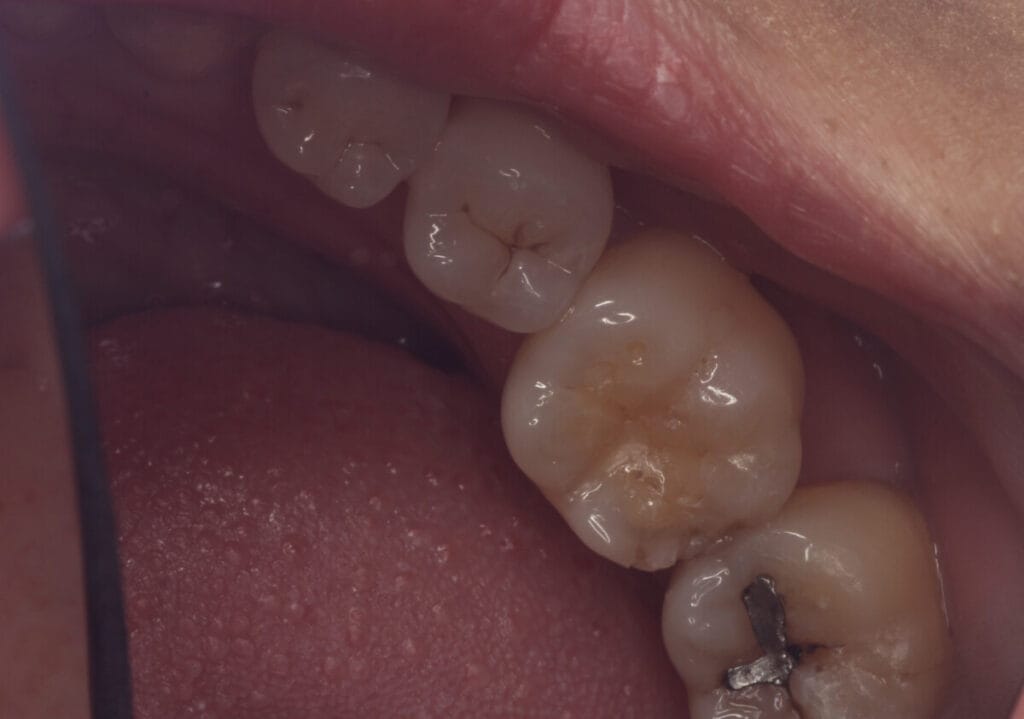
How Do We Treat Cavities?
There are two main ways to fill a cavity: direct fillings and indirect fillings.
1. Direct Filling
A direct filling means that after the dentist cleans out the cavity, they place a material directly into the tooth to restore its shape right away.
2. Indirect Filling
An indirect filling is when the dentist cleans the cavity, takes an impression of your tooth, and sends it to a dental lab. The lab then makes the filling, which is placed back onto the tooth.
Different Types of Filling Materials
Cavity treatment methods vary depending on how big or deep the cavity is and the patient’s preference.
1. Resin Fillings
If the cavity is shallow or just in the enamel, a simple resin filling can be used. Resin is a material that looks like the natural color of your tooth,
so it’s great for people who care about how their teeth look. It’s a quick fix, and you can eat right away after the treatment.
2. Inlays
If the cavity is deeper or the tooth is too damaged to use resin, an inlay might be the best option.
Inlays are made from materials like gold, ceramic, or resin. Gold is strong and doesn’t rust, but because people care more about how their teeth look now, ceramic inlays are becoming more popular.
3. Crowns
If the cavity is really big and affects most of the tooth, a crown might be needed. A crown is like a cap that fits over the whole tooth.
Crowns can be made from materials like gold, porcelain, or zirconia. Zirconia crowns are strong and look very similar to natural teeth, which is why they’re very popular these days.
How to Prevent Cavities
While it’s important to treat cavities, it’s even more important to prevent them. Even if you get the best treatment, cavities can still happen if you don’t take care of your teeth.
- Brush Your Teeth Regularly: Make sure to brush your teeth carefully to get rid of food particles and plaque.
- Fluoride Treatments for Kids: Children can benefit from fluoride treatments to help keep their teeth strong and prevent cavities.
- Regular Dental Checkups: It’s important to go to the dentist regularly to make sure cavities don’t get worse. If you catch them early, you can treat them easily and avoid bigger problems later.
Wrap-Up
Make sure to visit the dentist regularly to take care of your teeth and manage cavities. If you treat them early using the right cavity treatment methods, you can usually fix them with simple treatments.
But if you wait too long, you might need a root canal or even have the tooth pulled out and replaced with an implant.
Getting the proper treatment at the right time can help you save money and avoid pain in the future.


